A Double Feature Built Around a Shared Setting
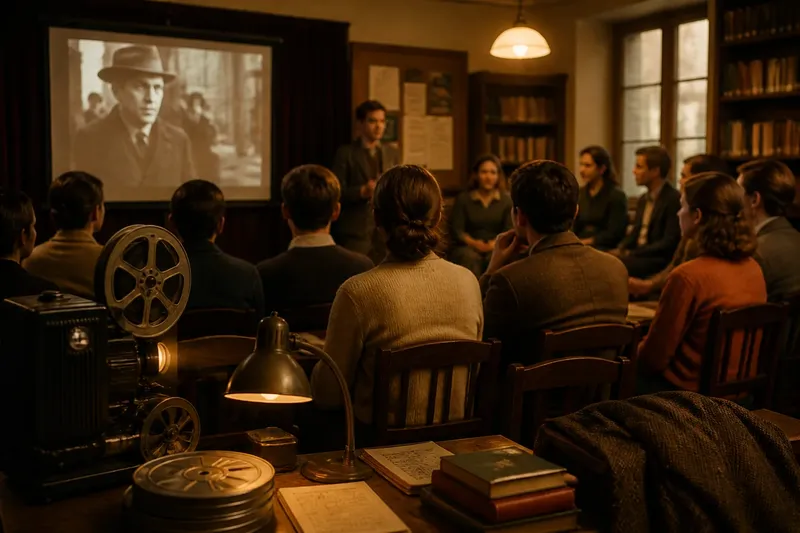
Plan a double feature around a shared setting and give viewers a clear way to compare how two films turn the same kind of place into different stories.
The common mistake in a shared-setting double feature is choosing two films because they both happen in a city, village, or workplace, then expecting the resemblance to carry the evening. A broad label gives viewers little to compare; the pairing can feel like two unrelated screenings, and discussion drifts toward plot summaries. A stronger double feature gives the films a specific kind of place in common, then asks what each one makes that place mean.
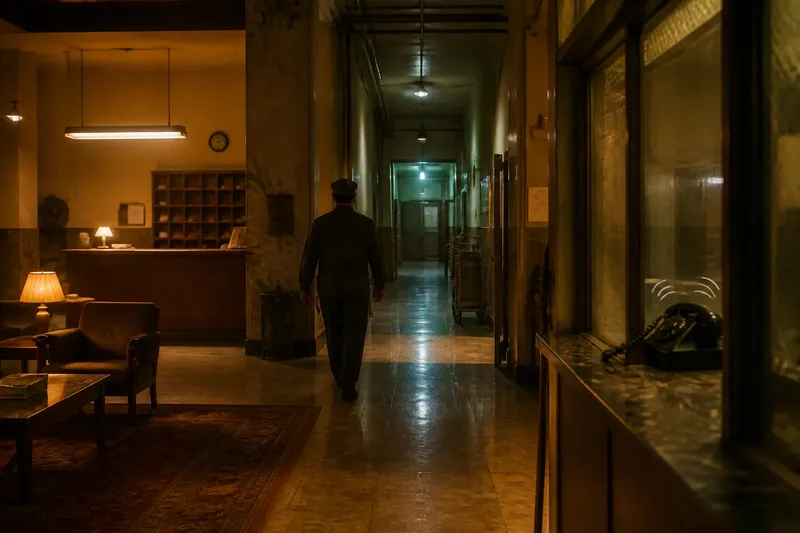
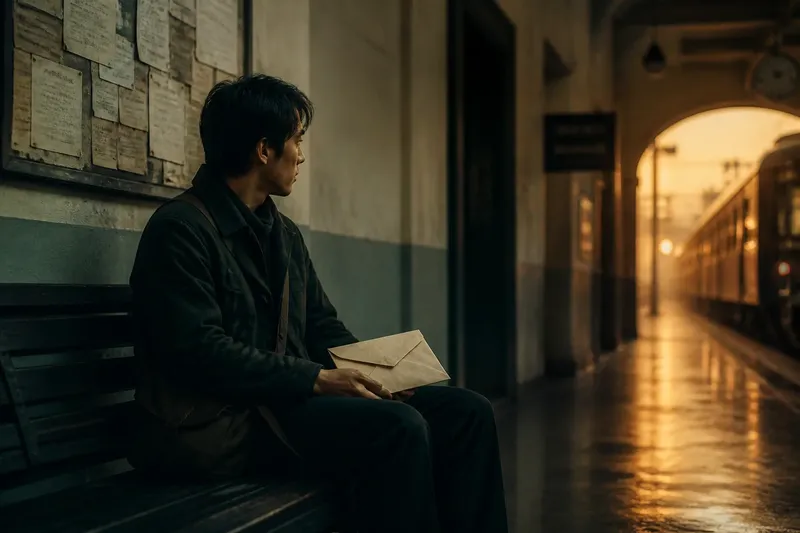
Think of the setting as a comparative lens, not a theme the films must share. One film might treat a railway station as a threshold for escape, while another turns a station into a place where people are held in routine. The contrast gives the audience something observable to follow: who controls the space, which areas the camera emphasizes, and what kinds of encounters the place permits.
What kind of setting can sustain a comparison?
Begin with a setting narrow enough to guide attention but broad enough to fit two distinct films. “A city” is usually too loose. “A city street at night,” “a family home divided among generations,” or “a school as a place of discipline” gives you a more useful starting point.
Choose a setting that matters to the story rather than one that appears only in passing. A place is doing meaningful work when it shapes a character’s choices, limits movement, brings people together, or carries a social expectation. Look for scenes where characters respond to the space, not just scenes in which the space happens to be visible.
Make a short list of candidate films and check whether each offers more than a few matching images. A pair may work even if one film uses the setting throughout and the other returns to it at key moments. What matters is that viewers can notice a recurring relationship between the place and the characters.
How should the two films differ?
Once you have a shared setting, look for a meaningful difference in how the films use it. The contrast might be between openness and confinement, welcome and exclusion, work and leisure, or public display and private refuge. Pick one main contrast. If every element differs, the audience may have no clear point of comparison; if nothing differs, the pairing can seem repetitive.
Check that the contrast arises from the films themselves. Do not assign one film the role of “optimistic” and the other “pessimistic” before watching closely. A supposedly welcoming place might still keep certain characters at its edges, while an austere setting might allow an unexpected form of belonging. Let the images and actions complicate the comparison.
Also consider tone and viewing demands. Two films do not need matching genres, but the jump between them should feel intentional rather than arbitrary. A melodrama and a comedy could both use a family home to organize changing relationships; explain that shared question in the program note, and the shift in tone becomes part of the evening’s design.
What should you check before confirming the pair?
Use these checks to decide whether the pairing is clear, balanced, and suitable for the audience you have in mind:
- Setting: Can you name the shared kind of place in a few specific words? If not, narrow the comparison.
- Importance: Does the place shape a character’s choices in both films? If it is merely a backdrop in one, consider another pairing.
- Contrast: Can you describe one difference in how the films treat the setting? If the difference needs a long explanation, choose a clearer one.
- Viewing order: Does either film introduce a question that the second can deepen or unsettle? If so, place that film first; if not, choose the order that best suits the occasion.
- Access: Can viewers follow both films with the available presentation, including subtitles where needed? Confirm the version and format before announcing the program.
- Discussion: Can you ask about what viewers saw without requiring specialist knowledge? If your question depends on background information, simplify it or provide a brief note.
For rights, screening formats, age suitability, and any local presentation requirements, check the relevant distributor information and venue rules before finalizing the event.
How do you choose the viewing order?
There is no automatic rule that the earlier, quieter, or more familiar film should come first. Instead, ask what you want the audience to carry from one screening into the next. Showing a film that makes the setting feel ordinary first can make a second film’s transformation of that place more striking. Reversing the order can make the first film look newly complicated when viewers encounter the setting again.
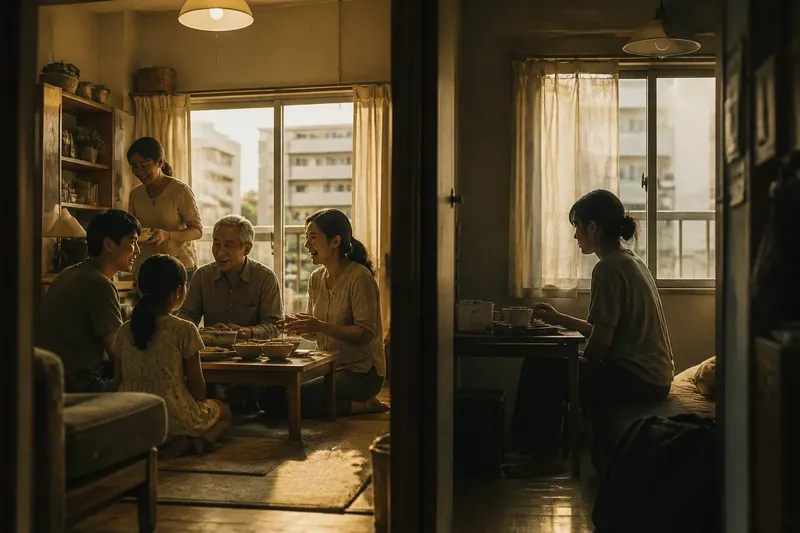
Imagine you are pairing two films centered on a family apartment. In the first, relatives use the rooms to preserve a sense of shared life; in the second, the same kind of home becomes a space where one character struggles to be heard. If the first screening comes earlier, viewers may enter the second expecting the apartment to offer comfort, then notice how the later film unsettles that expectation. This is an invented programming scenario, not a claim about particular films; the order should follow the actual scenes in your chosen pair.
Keep the break between screenings long enough for people to move, talk, and reset their attention. A short program note can name the shared setting and pose one question, but it should not tell the audience what conclusion to reach. The films need room to resist your framing.
What questions help viewers compare the films?
Who seems to belong in this setting?
Invite viewers to notice who moves freely, who waits for permission, and who appears at the margins. Those details can reveal how each film imagines belonging without reducing the conversation to a plot recap.
Which parts of the place receive the most attention?
Ask whether the films return to particular rooms, streets, entrances, or corners. A repeated location can become familiar, threatening, or newly significant as the story changes.
How does the setting shape what characters can say or do?
Consider privacy, crowding, distance, and the presence of other people. Viewers can compare how the films use these conditions to open or close possibilities for their characters.
Does the place mean something different by the end?
Ask what has changed: the location itself, a character’s relationship to it, or the audience’s understanding of it. That distinction helps the discussion stay grounded in the films’ choices.
How can you introduce and host the evening?
Keep the opening remarks brief. Name the shared setting and the contrast you hope viewers will watch for, then leave the meaning open. For example: “Both films center on a neighborhood market, but they give it different roles in the characters’ lives. Watch for who gets to linger and who has to keep moving.” That prompt offers a path into the films without prescribing a verdict.
After the second screening, begin with an observation rather than a judgment. Ask what image, room, or interaction stayed with people, then connect their answers to the shared setting. If the conversation stalls, return to a concrete comparison: where a character stands, who is present, or whether the place feels open to them.
Not every part of the evening needs interpretation. Elaborate handouts, a long lecture, or a separate historical dossier are not worth the effort unless they answer a question the chosen films actually raise. A clear pairing and a well-phrased prompt will often do more than extra material.
A double feature built around a shared setting works best when its comparison stays specific. Choose the place, identify the difference in how each film uses it, and let the viewing order and discussion prompt serve that difference. The result is not a verdict on which film is right; it is a chance to see how two stories make a familiar kind of place feel newly distinct.